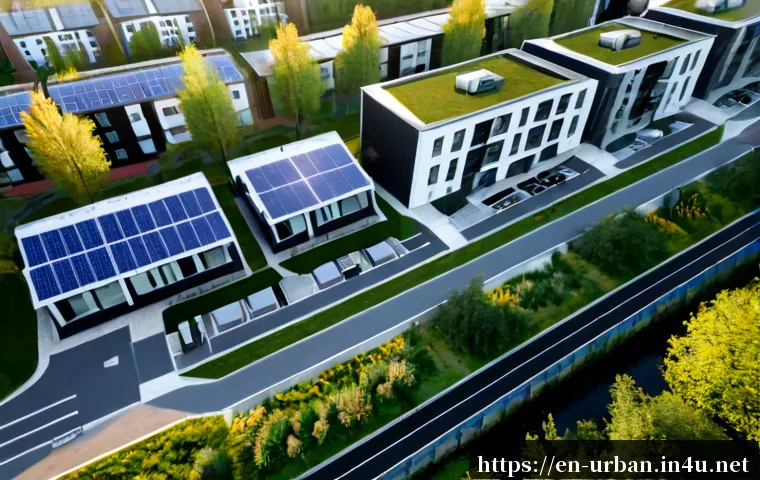
The most transferable low-carbon city measures are compact planning, building efficiency, and reliable walking, cycling, and transit access. District energy, district cooling, and integrated utility systems can add value where local demand, utilities, and operating capacity support them.

Showcase districts are useful references, but they are not ready-made templates for another city. A feasibility assessment is often justified before committing to shared energy infrastructure or major mobility construction.
The right choice depends on local climate, grid conditions, land use, financing, and the municipality’s ability to operate the system over time.
At a Glance
- Start with transferable measures: compact land use, efficient buildings, and low-car mobility can fit many urban contexts.
- Use district-scale systems selectively: heating, cooling, and integrated utilities need strong technical, financial, and operating alignment.
- Compare lifetime delivery needs: an attractive concept is not enough without utility capacity, transit access, maintenance planning, and resident benefits.
| Strategy | Capital Intensity | Operating Complexity | Likely Partners | Best-Fit Conditions |
|---|---|---|---|---|
| District heating or cooling | High | High | Energy providers, engineers, developers, utilities | Dense connected buildings and a capable long-term operator |
| Building efficiency and retrofits | Phased | Moderate | Building owners, architects, green building services | Existing building stock that will remain in use for decades |
| Transit, walking, and cycling | Varies by project | Moderate | Transport agencies, mobility planners, land-use teams | Housing, jobs, services, and frequent transport can be linked |
| Passive design and smart-building systems | Varies | Moderate | Architects, engineers, technology vendors | New construction or major refurbishment with clear performance requirements |
What Successful Low-Carbon Urban Development Has in Common
Start with compact land use, efficient buildings, clean energy, and low-car mobility
Successful low-carbon urban development usually combines several decisions rather than relying on one signature technology. Compact land use can place homes, work, services, and transport closer together. Efficient housing reduces the energy burden at the building level, while walking, cycling, and public transport can reduce dependence on private vehicles when they are convenient and safe.
The key condition is coordination. A cycling route is more useful when it connects real destinations. An efficient building strategy is stronger when procurement, design, construction, and operation all use compatible performance goals. Cities should avoid treating these elements as separate demonstration projects.
Why district-level systems can outperform isolated green buildings
A district approach can connect energy, water, waste, transport, and public-space decisions. Stockholm’s Hammarby Sjöstad is widely known for integrating these elements at district scale. That kind of coordination can be valuable where buildings are close enough to share infrastructure and where responsibilities are clear.
However, shared infrastructure is not automatically the best option. It requires a viable service model, dependable utility connections, technical oversight, and maintenance capacity. A single high-performing building may be easier to deliver than a complex district network in a location with dispersed demand or uncertain development timing.
The fastest answer: prioritize measures that fit local infrastructure and budgets
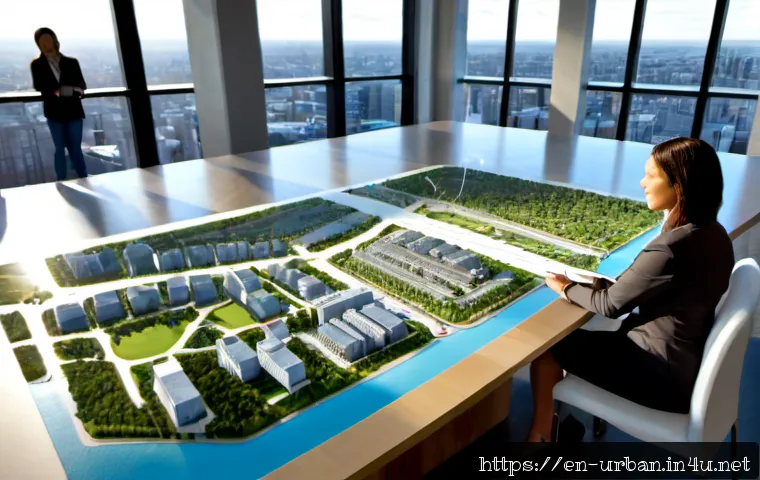
The fastest practical route is often to begin with measures that match existing conditions: building upgrades, street redesign, transit access, planning standards, and targeted pilots. Urban planning software can help teams test land-use scenarios, infrastructure capacity, and mobility connections before a city commits to a larger program. Specialist energy consulting becomes more useful when a proposal involves shared generation, district heating, district cooling, or complex utility interfaces.
Leading Examples and the Strategies Behind Them
Hammarby Sjöstad: connecting energy, waste, water, and transport
Hammarby Sjöstad in Stockholm is a well-known example of district-scale coordination between energy, waste, water, and transport planning. Its lesson is not that every city should duplicate the same system. The more adaptable lesson is to define how utilities and mobility decisions affect each other before construction locks in costly choices.
Vauban in Freiburg: car-reduced living and efficient homes
Freiburg’s Vauban district is recognized for car-reduced street design, public transport access, cycling infrastructure, and energy-efficient housing. It shows how street design and access choices can shape travel behavior alongside building performance. For planners, the relevant question is whether local transit frequency, cycling conditions, and daily services can support reduced car dependence.
Copenhagen: cycling networks and district heating at city scale
Copenhagen has invested extensively in cycling infrastructure and district heating as part of its broader climate strategy. The city-scale perspective matters: connected cycling networks work differently from isolated lanes, and district heating depends on an extensive system rather than a single building decision. These investments should be assessed against local network conditions, utility governance, and operating capability.
Masdar City and Singapore: planned districts, cooling, and climate-responsive design
Masdar City in Abu Dhabi was planned as a lower-carbon development using passive design measures, renewable energy, and reduced car dependence. In Singapore, district cooling is used in parts of the downtown area to centralize chilled-water production for connected buildings. Both examples underline a basic point: climate-responsive design matters. Cooling priorities, solar potential, water constraints, and street comfort differ widely between locations.
Compare Low-Carbon Strategies by Cost, Complexity, and Practical Value
District energy and cooling: high upfront investment, long-term operational value
District heating and cooling can require substantial early coordination across developers, utilities, designers, and future building owners. Their value depends on connected demand, energy sources, delivery timing, and an operator that can manage the system after construction. Before procurement, compare infrastructure feasibility assessments that address connection assumptions, utility interfaces, ownership, maintenance, and lifecycle responsibilities.
Building efficiency and retrofits: phased spending with measurable performance targets
Existing buildings often remain in use for decades, making retrofit programs important for urban emissions reduction. Retrofits can be phased by building type, ownership structure, and renovation cycles. Green building services can help translate broad policy goals into specifications, commissioning needs, and performance targets that building owners can use.
Do not assume one retrofit package suits every asset. Building condition, occupancy, local climate, and energy supply need review. Clear measurement boundaries are essential when comparing operational performance claims.
Transit, walking, and cycling: land-use coordination matters as much as construction budgets
Transit-oriented development can reduce reliance on private vehicles when housing, jobs, services, and frequent public transport are planned together. A mobility project should therefore be reviewed with land use, not as a transport-only purchase. Ask whether routes serve daily trips, whether streets are accessible, and whether new development supports rather than undermines transit use.
When to commission feasibility studies, engineering advice, or development consultancy
Commission specialist support when the decision involves high-capital infrastructure, multiple utility owners, unfamiliar technology, or a long operating commitment. Development consultancy can also help compare delivery models and procurement risks. For smaller interventions, a focused planning review or pilot may provide useful evidence before a broader rollout.
Delivery Steps, Procurement Needs, and Mistakes to Avoid
Define the emissions boundary before setting targets

Before selecting a solution, define what the target covers. Is the focus operational energy, transport, district infrastructure, or a broader lifecycle boundary? Claims about carbon neutrality, operational emissions, or lifecycle savings should be checked against current project data and clearly stated boundaries.
Match infrastructure design to local climate, utilities, and maintenance capacity
A technically impressive proposal can fail in practice if it does not fit the grid, water system, climate, or maintenance resources. Procurement documents should state performance expectations, handover responsibilities, data access, and who will operate each system after completion.
Avoid technology-led plans without resident access, affordability, or transit integration
Low-carbon development is not only an engineering exercise. Residents need access to services, practical mobility choices, and housing that works within local conditions. Technology should support these outcomes rather than become the project’s only purpose.
Use lifecycle cost reviews instead of choosing solely on initial construction price
A lower initial price may not represent the lower long-term burden. Compare construction, operation, maintenance, replacement responsibilities, and expected management needs. This does not guarantee a particular payback period, but it creates a more useful basis for comparing infrastructure proposals.
Which Approach Fits Different Urban Conditions?
New developments: embed energy, mobility, and water systems before construction
New districts offer the strongest opportunity to reserve space for utilities, active travel, public transport, and climate-responsive design. The priority is early coordination between land-use plans, utility design, and development phasing.
Existing neighborhoods: focus on retrofits, transit access, and street redesign
Established areas may benefit more from phased building retrofits, improved transit access, and safer walking and cycling conditions than from entirely new district systems. Existing ownership and construction disruption should shape the delivery plan.
Fast-growing cities: reserve land and utility capacity before density increases
Where growth is rapid, cities can protect future options by reserving corridors, service space, and transport access before land is fully built out. This is often easier than retrofitting constrained streets and utility routes later.
Resource-constrained municipalities: prioritize policy, building standards, and targeted pilots
Municipalities with limited capital can prioritize planning standards, building efficiency requirements, targeted pilots, and better coordination of public transport and land use. A pilot should have defined learning goals, not simply act as a promotional showcase.
Selection Criteria and Comparison Summary
Use a shortlist before approving a low-carbon urban project:
- Emissions boundary: What is being measured, and what is excluded?
- Capital requirement: Can the city, utility, developer, or operator fund delivery and future upgrades?
- Operating capability: Who maintains the infrastructure, manages data, and resolves service issues?
- Local fit: Does the proposal match the climate, grid, water system, transit network, and development density?
- Resident benefit: Does it improve access, comfort, mobility, and everyday usability?
When comparing energy consultants, planning software, or infrastructure proposals, ask for clear assumptions, implementation responsibilities, and lifecycle considerations—not only an attractive concept design. Official technical documentation and detailed service conditions should be reviewed before selecting a provider or procurement route.
Closing Thoughts
Low-carbon city development works best as a coordinated set of land-use, building, utility, and mobility choices. The examples from Stockholm, Freiburg, Copenhagen, Abu Dhabi, and Singapore offer useful directions, but local conditions determine whether a strategy is practical. Start with measures that match present capacity, then use feasibility work for decisions that create long-term infrastructure commitments. A careful comparison process is more valuable than copying a flagship district.
Useful Information to Keep in Mind
One: Transit-oriented development needs both frequent public transport and nearby daily destinations. Two: Retrofit planning matters because existing buildings can remain in use for decades. Three: District systems need an operating model as well as an engineering design. Four: Connected cycling infrastructure is more useful than isolated links.
Important Considerations
Total cost, emissions impact, and payback periods vary by land prices, local energy sources, climate, regulations, financing, and project delivery conditions. No city model transfers directly to every jurisdiction or community. Verify current project data, performance boundaries, utility assumptions, and procurement terms before making investment or policy decisions.
Frequently Asked Questions
Q1. Which low-carbon city strategy is usually the most affordable to start with?
A1. There is no universal lowest-cost option. Policy measures, building standards, targeted retrofits, and street or transit improvements may be easier to phase than major shared utility infrastructure. The suitable starting point depends on local assets, budgets, and delivery capacity.
Q2. Are district heating and district cooling systems worth the upfront investment?
A2. They can be appropriate where connected buildings provide sufficient demand and where utilities and operators can support long-term delivery. Their cost, emissions impact, and payback period should be evaluated through local feasibility and lifecycle reviews rather than assumed from another city’s example.
Q3. Can an existing city become lower carbon without building an entirely new eco-district?
A3. Yes. Existing neighborhoods can pursue building retrofits, better transit access, walking and cycling improvements, and street redesign. Because buildings often remain in use for decades, phased upgrades can be an important part of urban emissions reduction.